langextract
worthwhileGrounded structured extraction + interactive HTML viz, with multi-pass recall for long docs. Value-add over raw API calls.

What it is
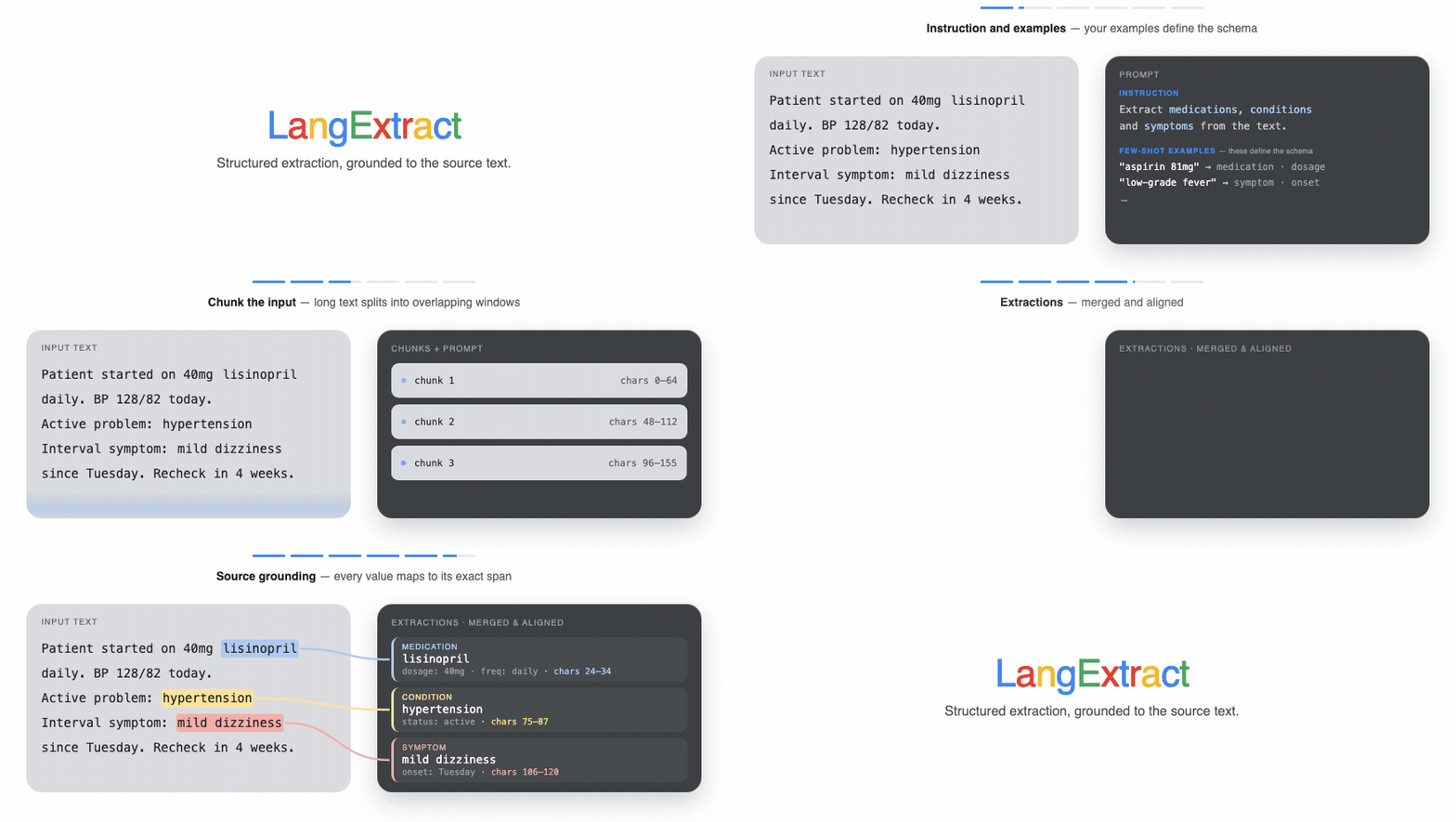
A Python library that extracts structured records (entities, attributes) from unstructured text using LLMs, and grounds every extracted value to its exact character span in the source document. Includes multi-pass chunking for long documents and an interactive HTML visualization.
How it differs from vanilla Claude
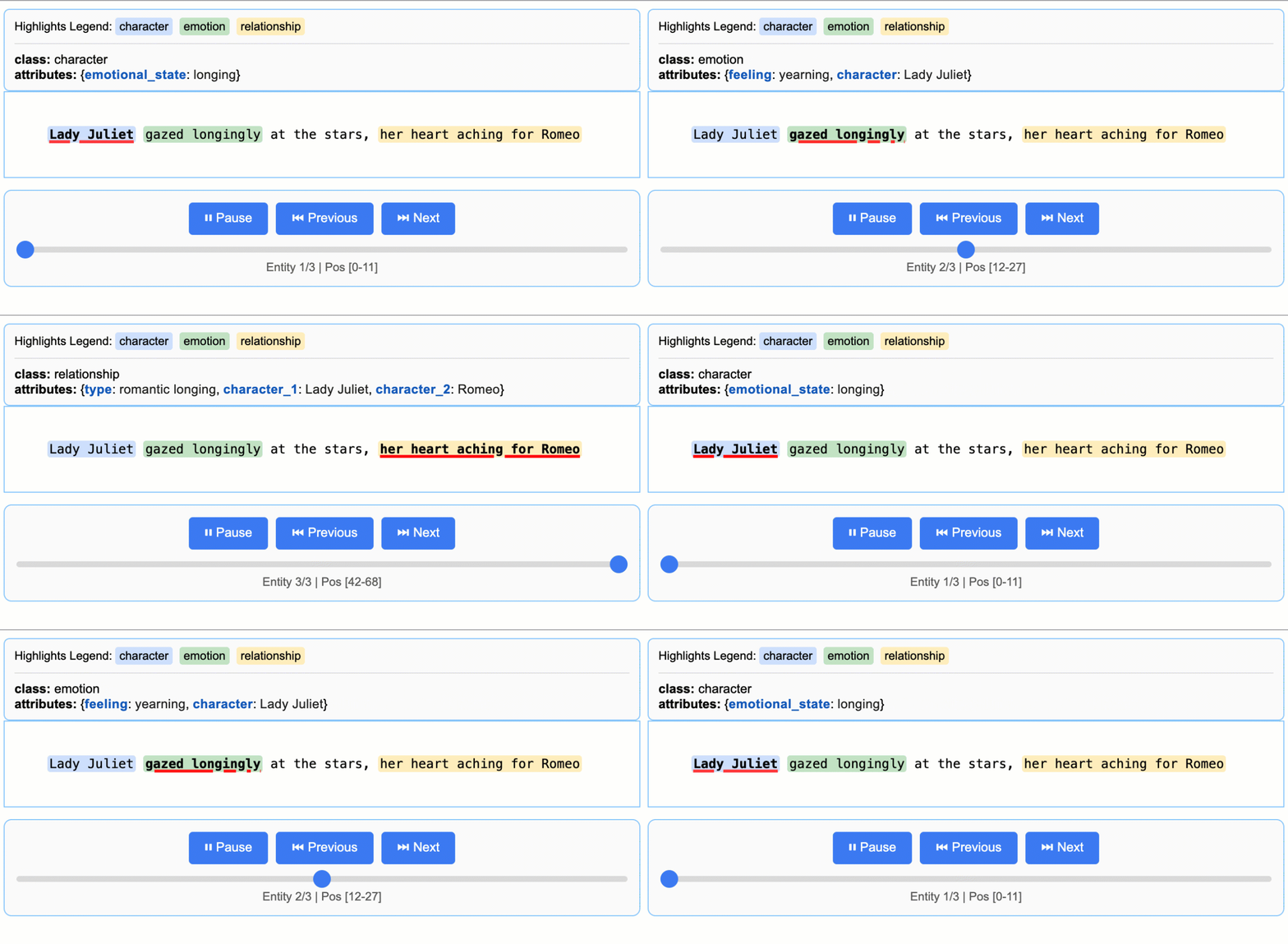
Vanilla Claude: you prompt 'extract these fields' and get JSON. No automatic verification that each value actually appears in the text. LangExtract returns char intervals, flags ungrounded extractions, and provides a visualizer to scan spans across pages.
Skill, plugin, or workflow shift?
Library integration: you import and call from Python. Not a plugin or agent skill — you bake it into a data pipeline or research workflow. The interactive HTML output is a nice bonus, not a new surface.
Devil's advocate — is this just complexity?
A capable base agent (Claude) can already output JSON with inline citations if you prompt it — 'return JSON with 'start_char' and 'end_char' for each extraction.' You'd need to handle chunking yourself for long documents, but that's a ~20-line script. The interactive visualizer is neat but not a productivity game-changer. The multi-pass logic is the real differentiator, yet it's an optimization over a serial loop. For most use cases, 'prompt + a loop + regex span search' gets 90% of the value in half the setup.
What would make it better
Native support for outputting to common formats (spaCy Doc, pandas DataFrame) without manual .jsonl conversion. A built-in confidence/accuracy score per extraction. Offline verification against a regex/grammar (beyond LLM's own grounding). Backend-agnostic span extraction that works equally well with local models.
The honest case for it
If you need audit-grade provenance for every extracted field — e.g., clinical trials, legal discovery — LangExtract saves you from rolling your own chunker, span tracker, and visualizer. The interactive HTML is not a toy; it lets a non-technical reviewer (doctor, lawyer) quickly verify results without reading code.
Who it's for
Audience fit
Depth and leverage for a technical engineer who wants to understand it and level up their workflow — not just offload work.
Value for someone who wants a more capable tool without the technical depth — accessible, does-it-for-you.
Engineers get precise source grounding and controlled extraction for long documents; vibe coders benefit but need to define schemas and few-shot examples.