autodev-studio
worthwhileMulti-agent SDLC pipeline with persistent repo knowledge base that beats cold Claude Code on cost and localization for large, repeated work.

What it is
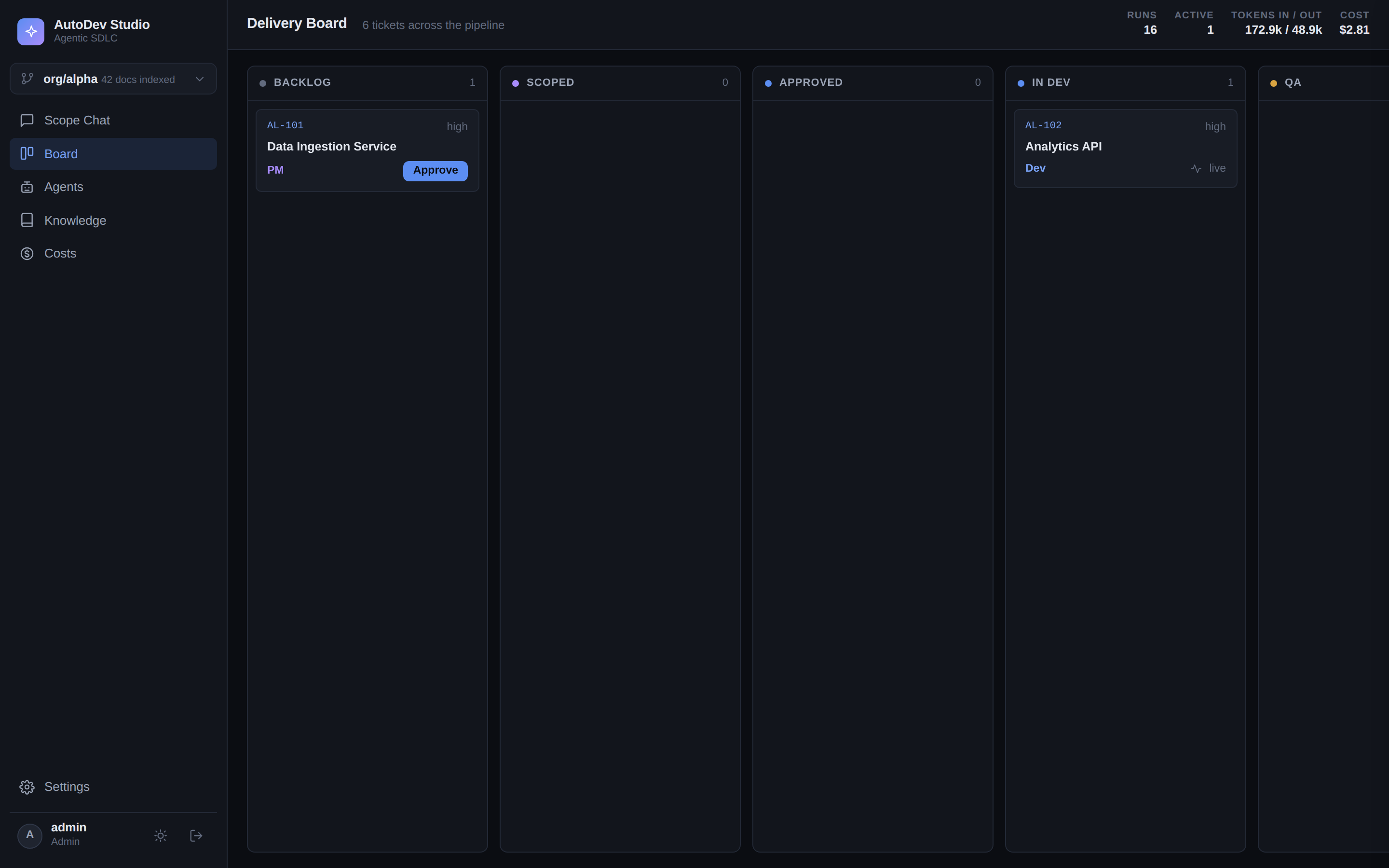
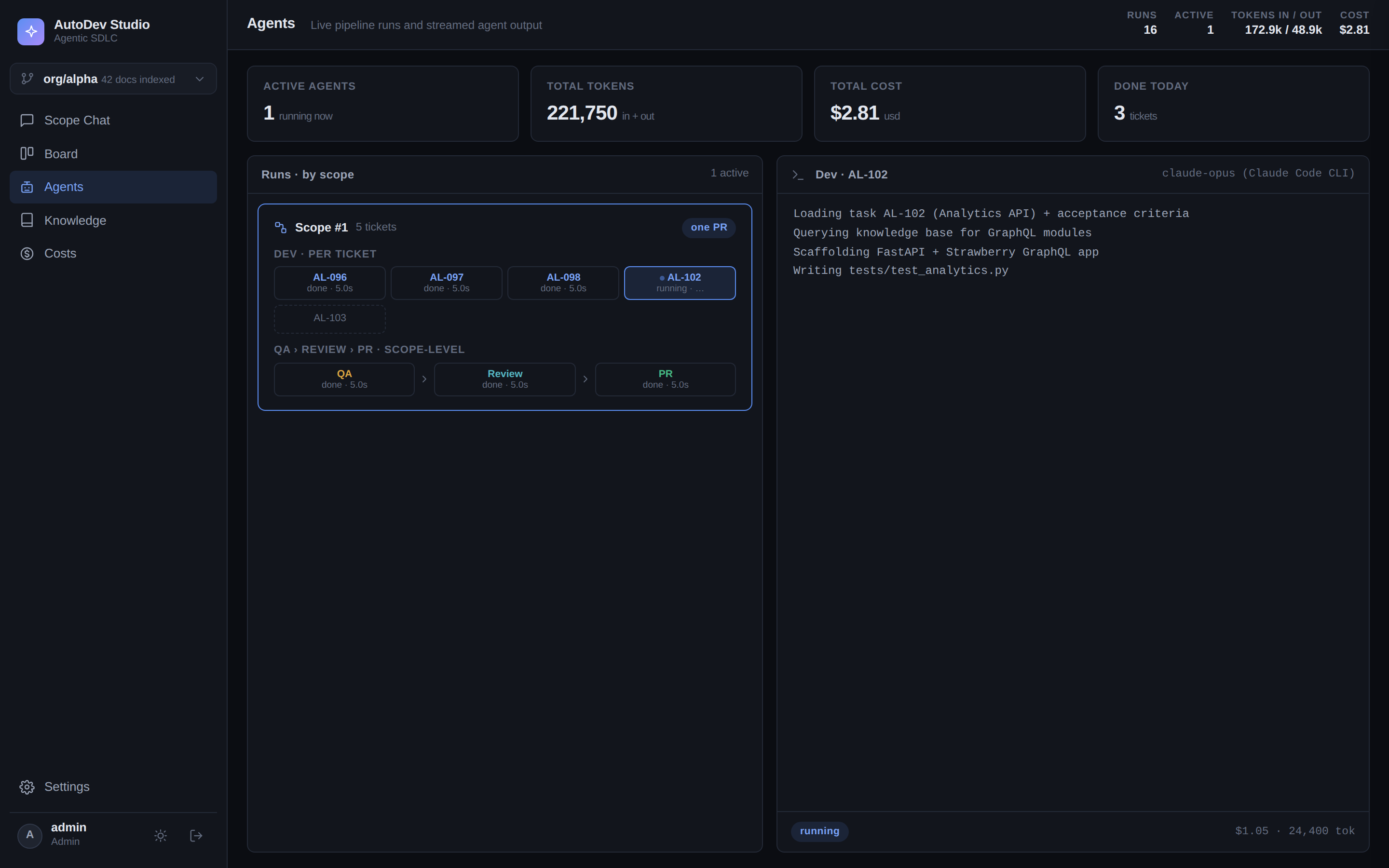
Autonomous multi-agent SDLC harness that builds a persistent knowledge base of a Git repository and drives a pipeline of agents (PM, Dev, QA, Review) to implement features from plain English descriptions, culminating in a PR.
How it differs from vanilla Claude
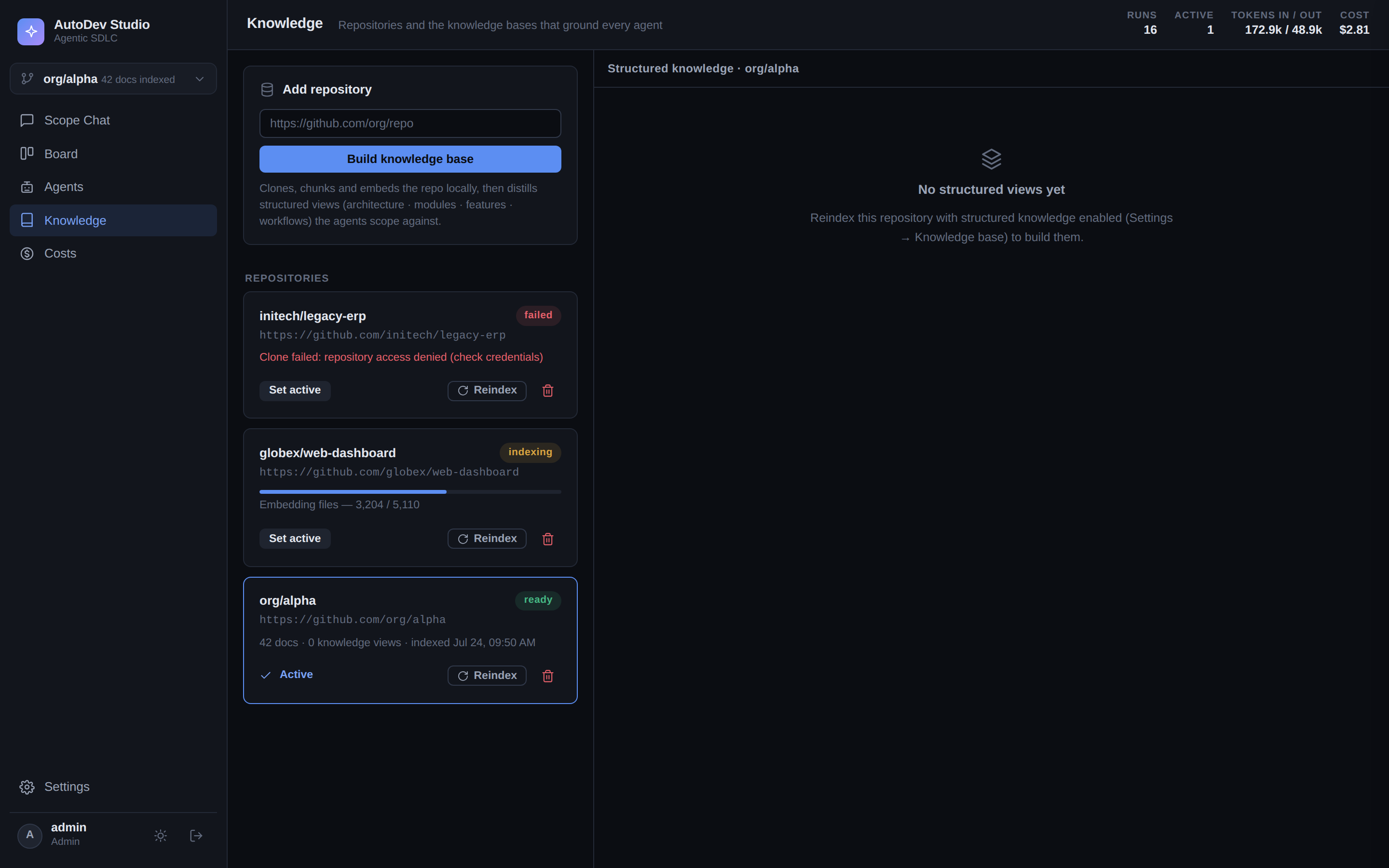
Vanilla Claude Code would work in the same repo without pre-built knowledge base, re-reading the codebase on each task. AutoDev Studio ingests the repo once into a vector+structure store, then each agent retrieves relevant context cheaply. The pipeline also enforces multi-agent review and cross-model checks that a single Claude session wouldn't.
Skill, plugin, or workflow shift?
Standalone app. It's not a skill you plug into an existing agent; it's a full system you run as a service with its own UI, database, and workflow engine. Integration is at the level of replacing your workflow, not augmenting a single agent.
Devil's advocate — is this just complexity?
A vanilla capable agent can be given a retrieval tool (e.g., vector search) and a multi-turn planning structure via prompts. The claimed cost savings come from pre-indexing the repo, which any RAG pipeline can do. The multi-agent orchestration adds complexity without proven quality gains over a well-prompted single agent with reflection. For small repos or cheap tasks, the overhead is pure waste. The benchmark may be cherry-picked (only two repos, and the 75% win is on an extreme case). The product is a system of many moving parts (Qdrant, FastAPI, multiple CLI subprocesses) that increases failure modes.
What would make it better
Provide a lightweight, library-only version that can be imported into existing agent workflows (e.g., as an MCP server for knowledge base queries and agent dispatch). Reduce setup complexity: single binary distribution. Publish benchmarks on more diverse repos and tasks to prove generalization. Add incremental knowledge base updates without full reingest. Support for custom review criteria beyond the current generic code-quality checks.
The honest case for it
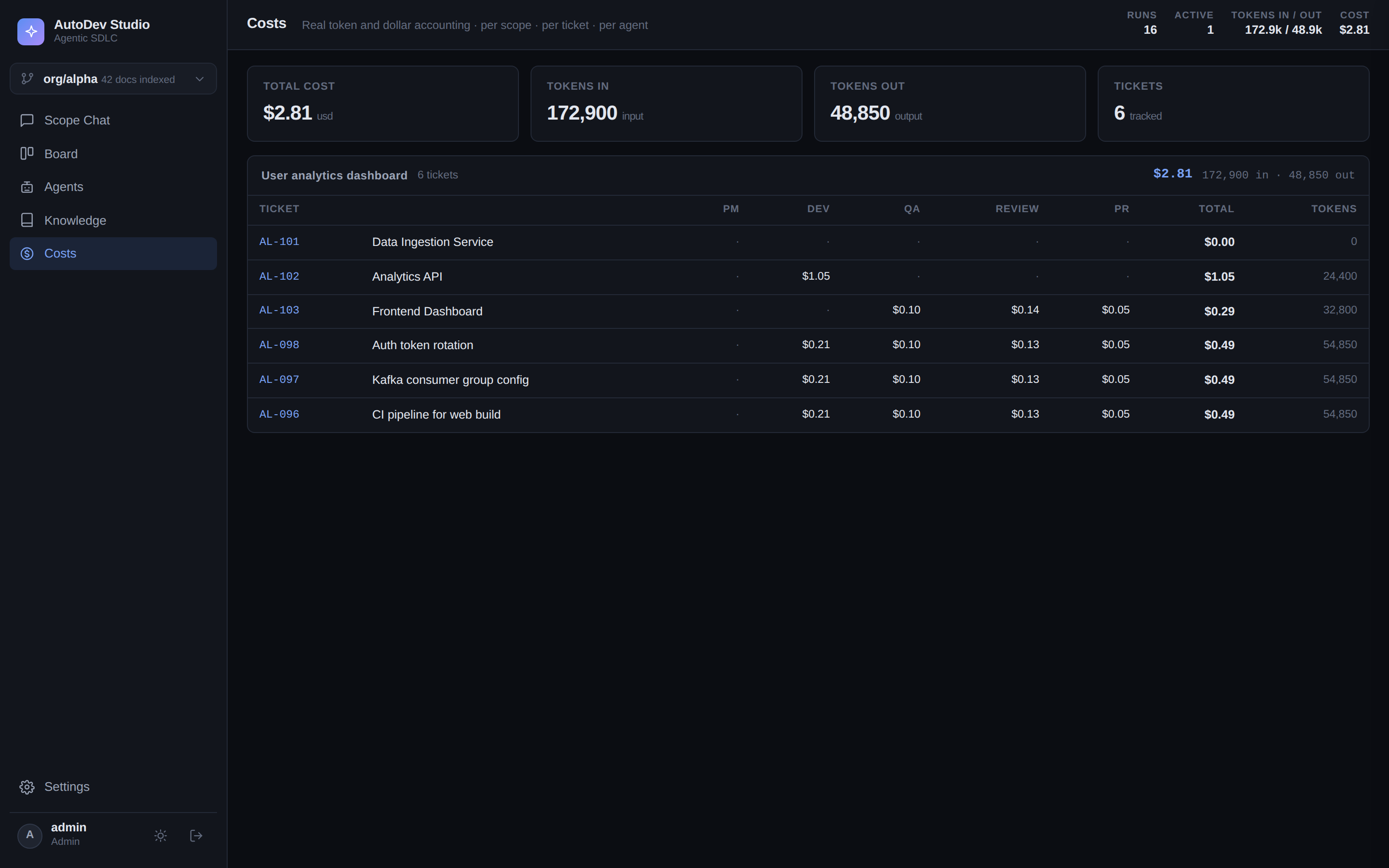
For teams that ship daily to the same large monorepo, the one-time knowledge base cost is quickly amortized. The multi-stage pipeline with cross-model review catches errors that a single agent would miss. The benchmark shows real cost savings on hard-to-localize bugs. The system is honest about its limitations and transparently tracks cost. It's a serious engineering effort that delivers a practical improvement for its target use case.
Who it's for
Audience fit
Depth and leverage for a technical engineer who wants to understand it and level up their workflow — not just offload work.
Value for someone who wants a more capable tool without the technical depth — accessible, does-it-for-you.
Setup and configuration require technical depth (Python, env vars, model selection), but the system abstracts away most complexity for end users. Best for teams with an engineering lead who can maintain it; a non-technical user could still describe features once it's deployed.