
lobehub
worthwhilePolished multi-agent orchestrator with memory and scheduling—worth spinning up if you want more than single-chat interfaces.

What it is
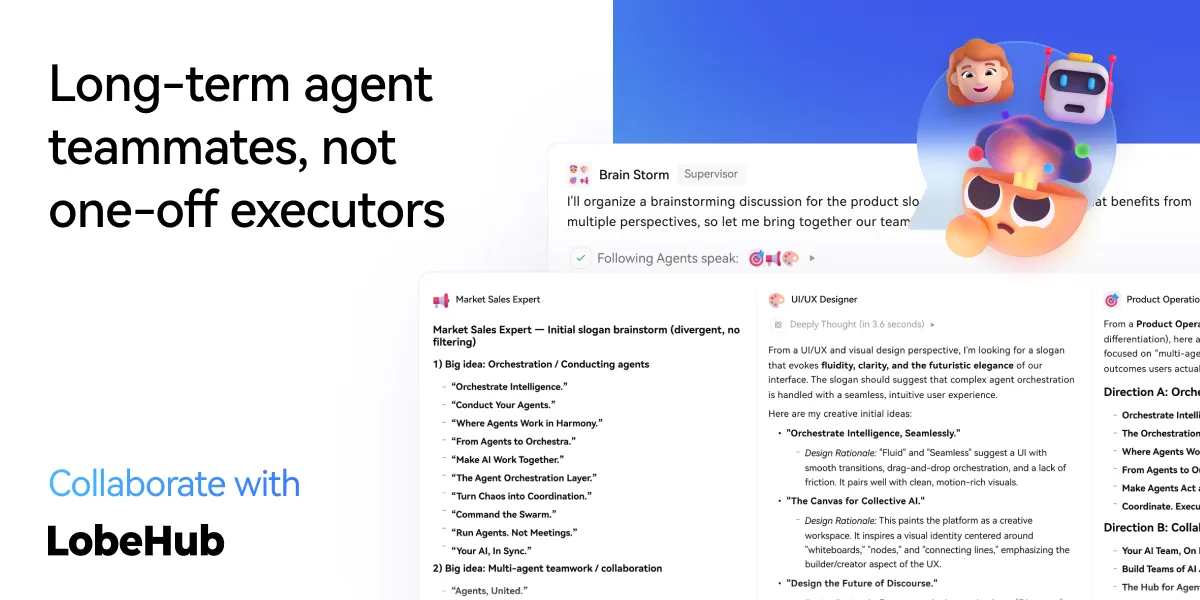
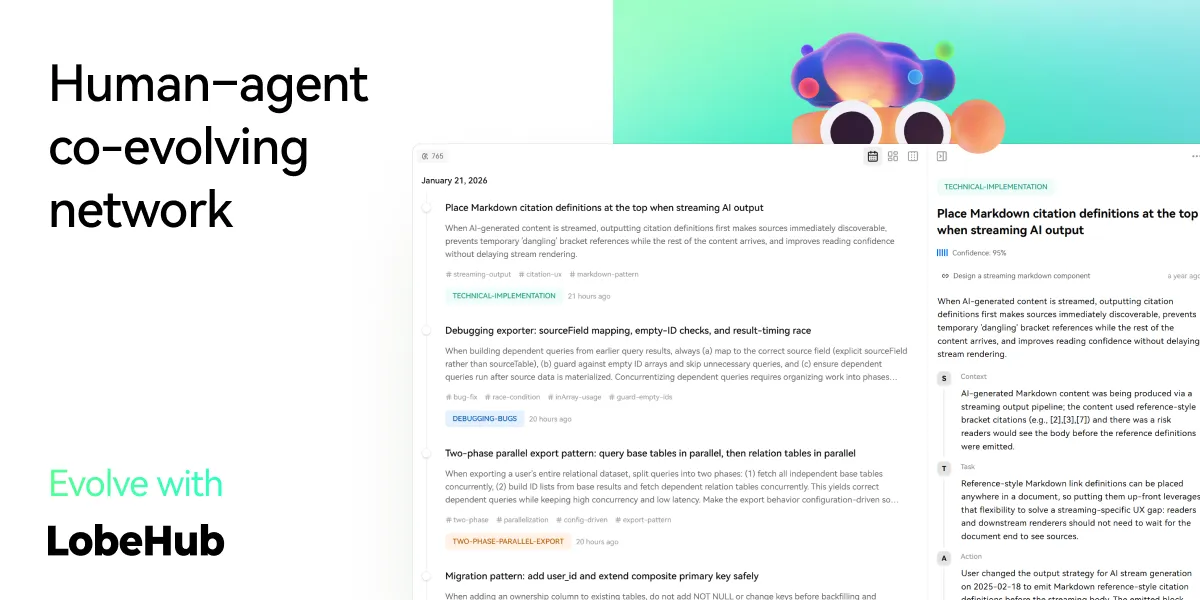
LobeHub is an open-source, self-hostable platform for orchestrating multiple AI agents. It provides a unified UI where users can create, delegate work to, and monitor agents with persistent memory, scheduling, and collaboration features (agent groups, workspaces). It includes an IM gateway to connect agents to messaging apps and supports plugins/MCP for skill expansion.
How it differs from vanilla Claude
Vanilla Claude can be prompted to act as different agents in separate chats, but it has no built-in agent lifecycle management, no persistent cross-session memory UI, no scheduling (run agents at set times), no agent-group collaboration with shared context, and no IM integration. LobeHub adds these as first-class features in a self-hosted app.
Skill, plugin, or workflow shift?
standalone-app: It is a full web application with its own backend, database, and frontend, designed to be deployed and used independently. It is not a library, plugin, or prompt—it replaces the chat interface entirely.
Devil's advocate — is this just complexity?
For a developer comfortable with scripting, many of these features are replicable with a few Claude API calls and a cron job. The persistent memory can be emulated with a simple JSON file or vector store. The real value of LobeHub is the integrated UI and scheduling, but if you only need one or two agents, the overhead of setting up and maintaining a full-stack app outweighs the convenience. The 80k stars suggest community hype, not necessarily technical depth—many users may not need such a heavy solution for what amounts to a better chat window.
What would make it better
Provide a lightweight CLI or SDK alternative for headless use (no UI needed). Improve composability: allow the agent orchestration backend to be consumed as a library or API from existing codebases without requiring the full web app. Add native support for hybrid local/remote model execution to reduce API costs.
The honest case for it
If you manage more than 3-4 distinct agent tasks that need to run on a schedule, collaborate, or persist memory across conversations, the time you save from not building this infrastructure yourself is significant. The self-hosted deployment keeps data private—unlike many agent platforms. The active community and plugin ecosystem reduce the risk of lock-in.
Who it's for
Audience fit
Depth and leverage for a technical engineer who wants to understand it and level up their workflow — not just offload work.
Value for someone who wants a more capable tool without the technical depth — accessible, does-it-for-you.
Engineers benefit from the API gateway, self-hosting, and plugin ecosystem; vibe coders get a pre-built multi-agent UI with scheduling and memory.