
appless
nicheA compelling prototype of generative-UI-on-mobile, but simulated backends make it a demo, not a workflow tool.
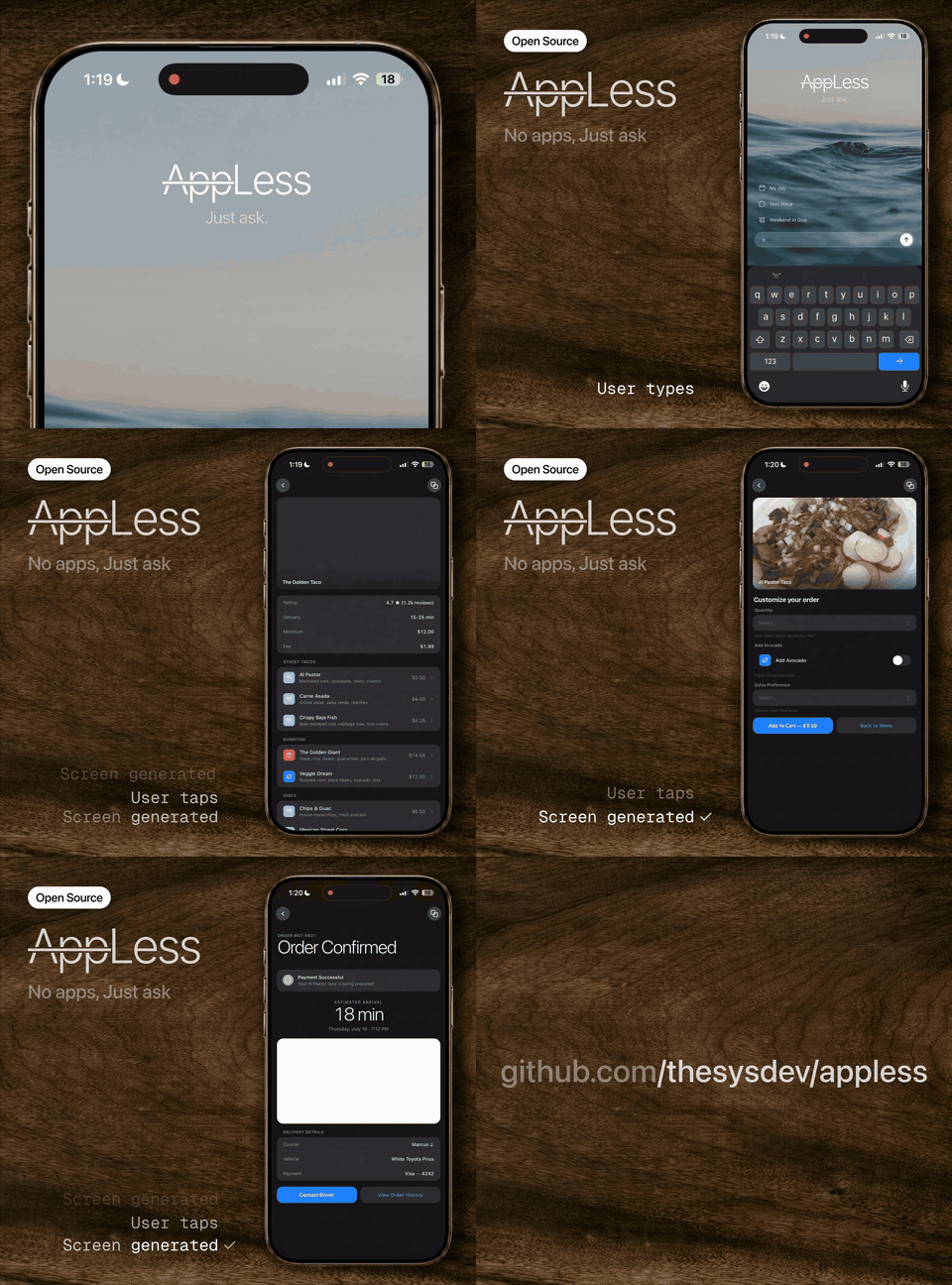
What it is
A mobile app (iOS/Android) where every screen is generated on-the-fly by an LLM and rendered as native UI — no apps, no menu navigation, just a text prompt. Uses OpenUI's streaming DSL (openui-lang) to produce Cupertino or Material 3 components.
How it differs from vanilla Claude
Claude can generate UI mockups as text, HTML, or JSON; AppLess delivers them as real native widgets on a phone, streamed and interactive. Vanilla agent cannot produce a native mobile app screen or handle touch events.
Skill, plugin, or workflow shift?
Standalone app — you install it on your phone, it's a self-contained runtime for generative UI, not a plugin or library you integrate elsewhere.
Devil's advocate — is this just complexity?
This is exactly the kind of repo that looks revolutionary but is hollow. Every action is faked: 'order placed' does nothing, 'weather' uses plausible fiction unless you bring your own Exa/Unsplash keys, and even then the data is read-only and stateless. You could get the same UX by asking Claude to generate a React Native mock and running it yourself — actually more control, same demo effect. The complexity of the OpenUI pipeline, DSL, renderer, and design systems is pure overhead for what is essentially a screenshot generator with a phone wrapper. No real app does less.
What would make it better
Wire at least one real service — Google Calendar, Spotify, Uber Eats API — so a generated screen can actually book a ride or play a song. Without that, it remains a toy. Also add offline state so screens aren't lost on every regenerate.
The honest case for it
If you want to see the future of mobile UI — where every app is a transient interface summoned by intent — this is the most honest live demo of that vision. The architecture (contract → DSL → native renderer) is clean and could become real if someone invests in the backend integrations.
Who it's for
Audience fit
Depth and leverage for a technical engineer who wants to understand it and level up their workflow — not just offload work.
Value for someone who wants a more capable tool without the technical depth — accessible, does-it-for-you.
Shows off a futuristic demo, but no real backend integration makes it a toy — fun for prototyping, not for production engineers.