
cognee
worthwhilePersistent memory for AI agents via knowledge graphs — a genuine utility, but replicable with custom MCP setups.


What it is
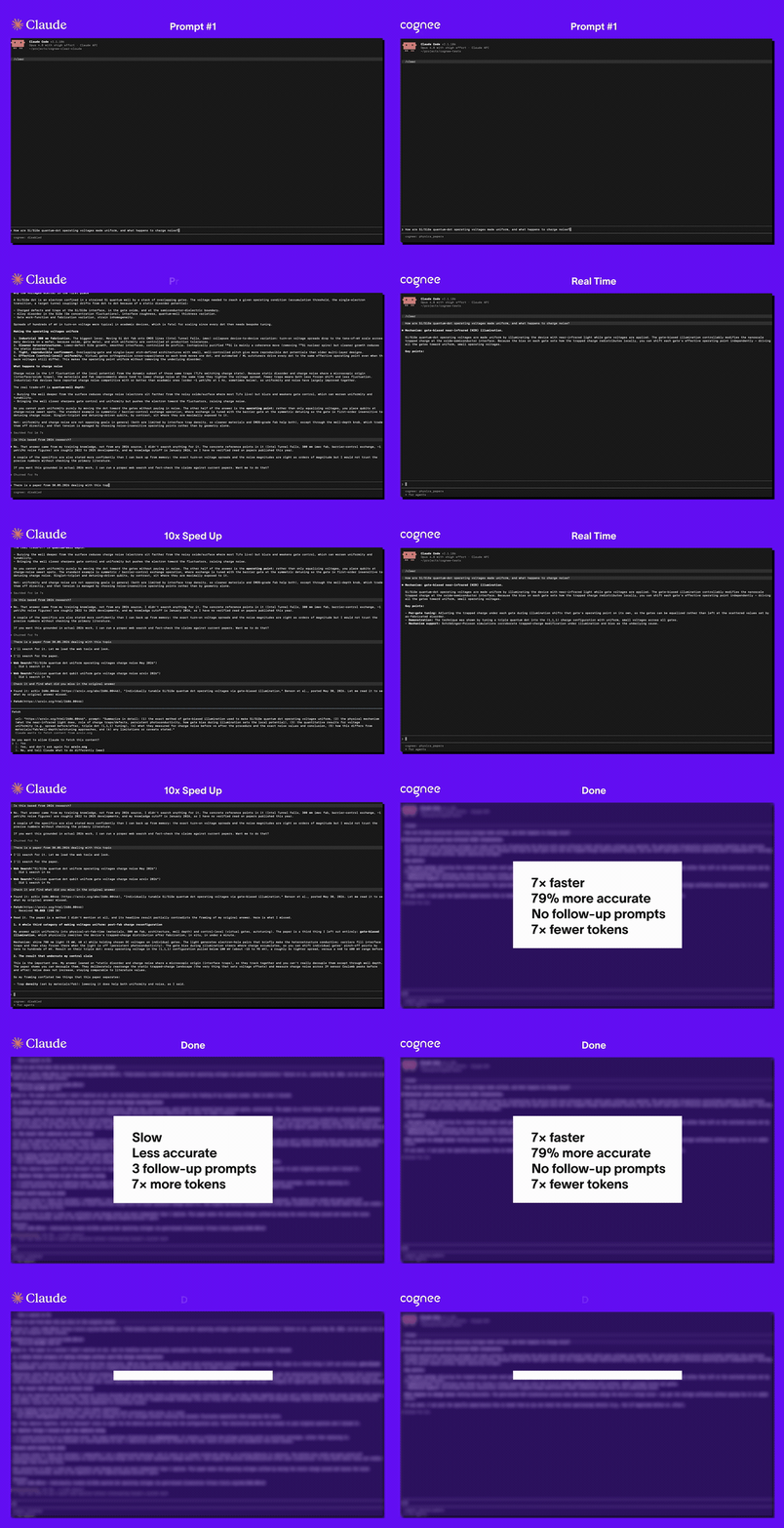
Cognee is an open-source Python library and server that ingests data (text, docs, etc.) into a persistent knowledge graph + vector store, providing AI agents with long-term memory across sessions via a simple API (remember, recall, forget, improve).
How it differs from vanilla Claude
A vanilla Claude agent has no built-in persistent memory beyond its context window. Cognee adds a structured, queryable graph and vector store that survives across sessions, enabling agents to recall facts, relationships, and conversation history autonomously.
Skill, plugin, or workflow shift?
Knowledge: Cognee is a knowledge layer that agents can tap into — it's not a plugin or a skill but a self-hosted memory infrastructure that changes how agents operate (persistent, shared context).
Devil's advocate — is this just complexity?
Claude can already achieve persistent memory with a simple MCP server or a custom script that writes to a file or SQLite. Cognee's knowledge graph adds complexity (Docker, Neo4j, PGVector) without a significant leap in capability for most use cases. The 'improve' and 'cross-agent sharing' features are niche — most agents don't need a full graph. For a single-agent chat, a one-line file write is simpler and more reliable.
What would make it better
A zero-dependency, embeddable version that runs fully in-memory (no Docker/Postgres) for local development. Better integration with non-OpenAI LLMs out of the box (currently only OpenAI default). Streamlined Claude Code plugin setup to avoid manual env var configuration.
The honest case for it
For teams building multi-agent systems that need to share context, trace decisions, and evolve knowledge over time, rolling your own graph+vector memory is non-trivial. Cognee provides a battle-tested, open-source foundation that handles ingestion, deduplication, ontology generation, and query routing — saving weeks of engineering.
Who it's for
Audience fit
Depth and leverage for a technical engineer who wants to understand it and level up their workflow — not just offload work.
Value for someone who wants a more capable tool without the technical depth — accessible, does-it-for-you.
Engineers will appreciate the composable memory pipeline and integrations; vibe coders may find Docker setup and graph concepts daunting.